Unlocking Logic: A Comprehensive Guide to Karnaugh Maps and Boolean Expression Simplification
Related Articles: Unlocking Logic: A Comprehensive Guide to Karnaugh Maps and Boolean Expression Simplification
Introduction
In this auspicious occasion, we are delighted to delve into the intriguing topic related to Unlocking Logic: A Comprehensive Guide to Karnaugh Maps and Boolean Expression Simplification. Let’s weave interesting information and offer fresh perspectives to the readers.
Table of Content
- 1 Related Articles: Unlocking Logic: A Comprehensive Guide to Karnaugh Maps and Boolean Expression Simplification
- 2 Introduction
- 3 Unlocking Logic: A Comprehensive Guide to Karnaugh Maps and Boolean Expression Simplification
- 4 Closure
Unlocking Logic: A Comprehensive Guide to Karnaugh Maps and Boolean Expression Simplification
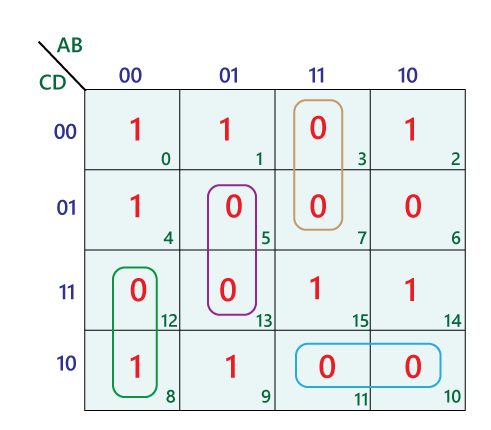
In the realm of digital electronics and computer science, Boolean algebra serves as the foundation for understanding and manipulating logic circuits. These circuits, built from fundamental logic gates like AND, OR, and NOT, form the backbone of modern computing. While the principles of Boolean algebra are relatively straightforward, simplifying complex Boolean expressions can be a daunting task. This is where Karnaugh maps, also known as K-maps, emerge as a powerful tool, providing a visual and intuitive approach to simplifying Boolean expressions.
The Essence of Karnaugh Maps
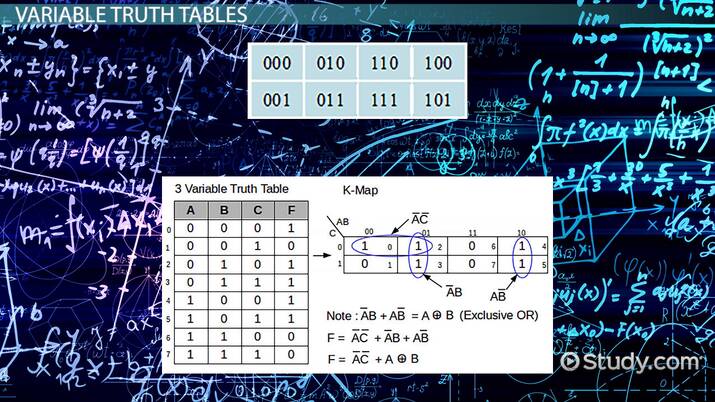
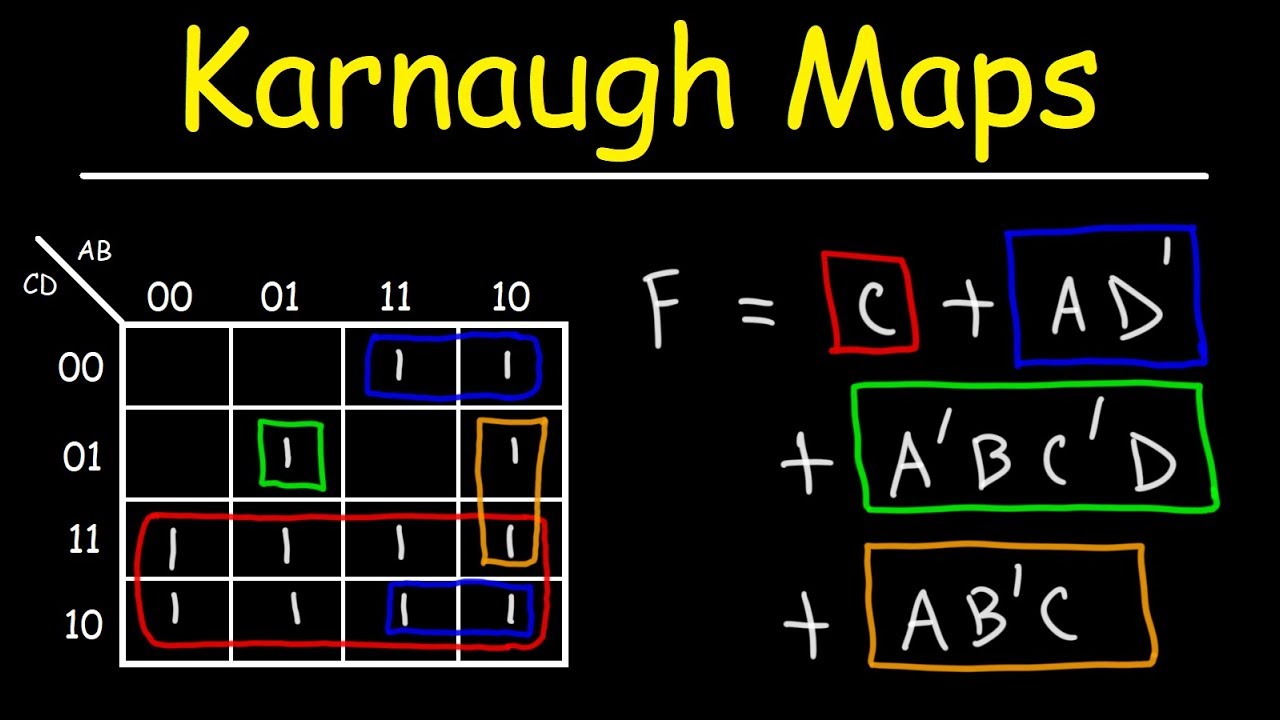
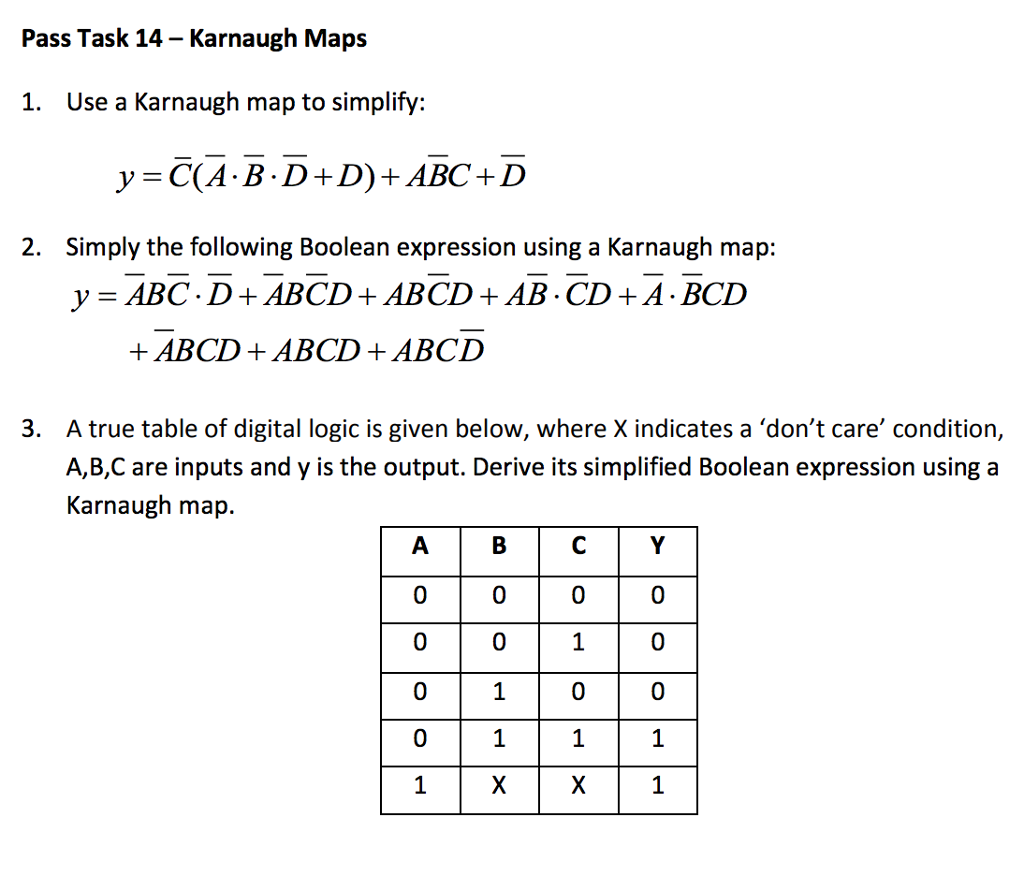
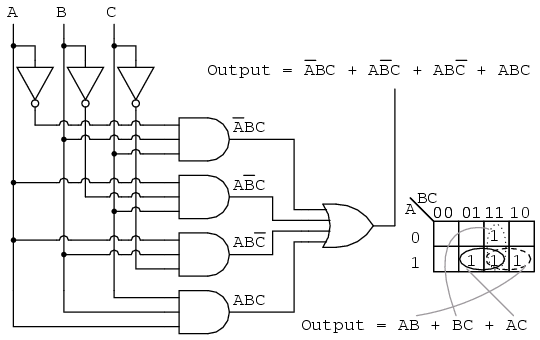
A Karnaugh map is a graphical representation of a truth table, a tabular display of all possible input combinations and their corresponding output values for a Boolean function. The map arranges the input combinations in a specific pattern, ensuring adjacent cells represent input combinations differing by only one variable. This arrangement facilitates the identification of groups of adjacent "1" cells, representing terms that can be combined to simplify the Boolean expression.
Constructing a Karnaugh Map
Creating a Karnaugh map involves the following steps:
Simplifying Boolean Expressions with K-Maps
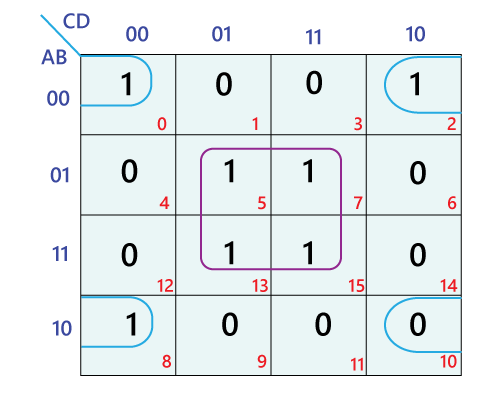
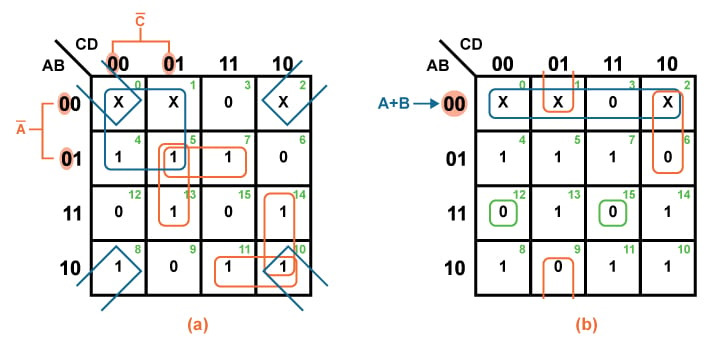
The key to simplifying Boolean expressions using K-maps lies in identifying and grouping adjacent "1" cells. These groups represent terms that can be combined using the Boolean algebra laws. The following rules govern the grouping process:
Once the "1" cells are grouped, each group represents a simplified term in the Boolean expression. The simplified expression is then obtained by combining these terms using OR operations.
Benefits of Using Karnaugh Maps
Employing Karnaugh maps offers several advantages in simplifying Boolean expressions:
Example: Simplifying a Boolean Expression using a K-Map
Let’s consider the following Boolean expression:
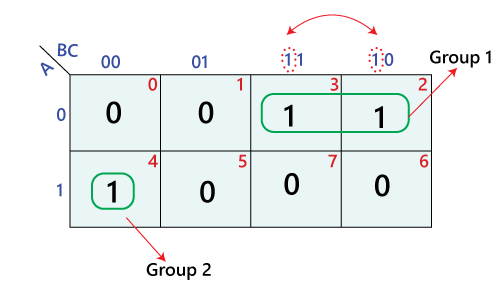
F(A, B, C) = Σ(0, 2, 4, 5, 6)
This expression represents a function with three variables (A, B, C) and output values of 1 for the input combinations 0, 2, 4, 5, and 6.
Step 1: Constructing the K-Map
A 3-variable K-map requires a 2^3 = 8-cell grid. The rows and columns are labeled with the binary values of the input variables (A, B, C) using Gray code:
00 01 11 10 0 0 1 1 1 1 1 0 0 1Step 2: Populating the Map
The output values corresponding to the input combinations are entered into the respective cells:
00 01 11 10 0 1 1 1 1 1 1 0 0 1Step 3: Grouping the "1" Cells
The "1" cells are grouped as follows:
- Group 1: Covers cells (0, 2, 4, 6)
- Group 2: Covers cells (0, 1)
Step 4: Deriving the Simplified Expression
Each group represents a simplified term:
- Group 1: A’C’
- Group 2: B’
Combining the terms using OR operation:
F(A, B, C) = A’C’ + B’
This simplified expression is equivalent to the original expression but requires fewer logic gates to implement.
FAQs on Karnaugh Maps and Boolean Expression Simplification
Q1. What are the limitations of Karnaugh maps?
While powerful, Karnaugh maps are best suited for simplifying expressions with a limited number of variables. For expressions with more than five variables, the visual complexity of the map becomes challenging to manage.
Q2. Are there alternative methods for Boolean expression simplification?
Yes, other methods like the Quine-McCluskey algorithm and Boolean algebra manipulation can be used to simplify expressions. However, these methods often require more computational effort compared to K-maps.
Q3. Can Karnaugh maps be used for functions with multiple outputs?
Yes, separate K-maps can be constructed for each output function. However, the simplification process may require coordination between the maps to ensure optimal results.
Tips for Effective K-Map Usage
- Practice: Familiarity with K-maps is crucial for efficient simplification. Practice with various examples to develop a strong understanding of the process.
- Visual Inspection: Carefully inspect the map for potential groupings. Look for patterns and overlaps to maximize coverage.
- Iterative Approach: If the initial simplification results in a complex expression, consider iterating the process by simplifying smaller portions of the map.
- Don’t Overlook Don’t Cares: If the problem specifies "don’t care" conditions, utilize them to create larger groups and further simplify the expression.
Conclusion
Karnaugh maps provide a valuable tool for simplifying Boolean expressions, offering a visual and intuitive approach that enhances efficiency and clarity. By effectively utilizing K-maps, designers can create more compact and cost-effective logic circuits, minimizing the complexity of digital systems. While limitations exist for high-variable expressions, the effectiveness of Karnaugh maps in simplifying logic functions makes them an indispensable tool for digital designers and engineers.

Closure
Thus, we hope this article has provided valuable insights into Unlocking Logic: A Comprehensive Guide to Karnaugh Maps and Boolean Expression Simplification. We appreciate your attention to our article. See you in our next article!